Products
No results were found for your search. You can try a different keyword.
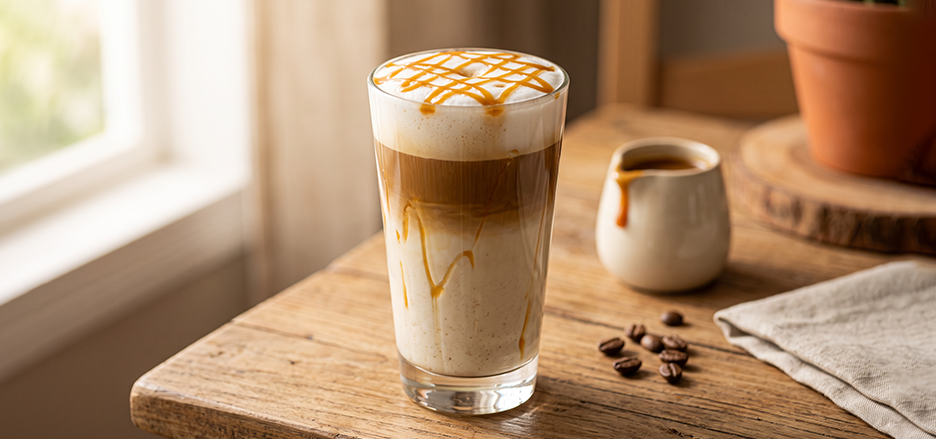
Perhaps one of the most iconic drinks on any coffee menu. Milk at the bottom of the glass, espresso in the middle, and caramel sauce drizzled over the foam. Visually appealing and perfectly balanced in flavor, it combines sweetness with the rich taste of coffee. A caramel macchiato is one of those rare drinks that both espresso newcomers and seasoned espresso lovers order with equal enthusiasm.
But is it possible to make this drink at home? Absolutely, and it is much easier than you might think. With just a few ingredients and a few simple steps, you can prepare a caramel macchiato without visiting a café—one that might even rival your favorite coffee shop.
The Italian word “macchiato” means “stained” or “marked.” A classic espresso macchiato is an espresso lightly “marked” with a few drops of milk. A caramel macchiato, however, is a much milkier and sweeter version of this concept.
In the traditional preparation, vanilla syrup is added to the bottom of the glass, followed by steamed milk and a generous layer of foam. The espresso is poured in last. As it flows down through the milk, distinct layers begin to form. Finally, caramel sauce is drizzled over the top in a spiral pattern. When served, its beautiful layered appearance appeals to both the eyes and the palate.
It is worth noting that this drink, now an essential part of coffee culture around the world, differs considerably from the original macchiato tradition. It is best appreciated as a distinct drink in its own right.
Because it contains vanilla syrup and caramel sauce, a caramel macchiato has a predominantly sweet flavor profile. To ensure that the espresso still stands out, choosing a strong, characterful coffee bean is essential. A weak or flat espresso can disappear completely beneath the milk and caramel.
Juan Valdez’s Caldas range is an ideal choice for this drink. The beans’ natural caramel notes create an unexpectedly harmonious pairing with the caramel sauce added on top. Rather than an artificial sweetness, the result is a layered, naturally rich flavor. The espresso is strong enough to balance the sweetness of the milk and syrup without becoming too intense to enjoy.
The Cumbre range is another excellent option for those who prefer a richer, darker profile. Its character is particularly noticeable in the iced version of the drink, known as an iced caramel macchiato. The balanced acidity of Colombian Arabica also plays an important role here. Highly acidic beans can clash with the sweetness of caramel, whereas balanced profiles such as Caldas and Cumbre create a more natural harmony.
You only need a few basic ingredients to make a caramel macchiato at home. For one or two shots of espresso, you can use an espresso machine or, alternatively, a moka pot or AeroPress. To froth the milk, a steam wand, an electric or handheld milk frother, or even a French press will do the job.
Vanilla syrup, preferably a high-quality product or a homemade version, forms the base of the drink. Caramel sauce is essential for the finishing touch. You can use ready-made caramel sauce or prepare your own in just a few minutes with butter, sugar, and cream.
The first step in making a hot caramel macchiato is to add the vanilla syrup to your glass. Pour one or two pumps, or approximately one teaspoon, of vanilla syrup into a large glass. The syrup forms the base and provides the foundation for the drink’s layered structure.
The second step is to froth the milk. Heat and froth 150 to 200 ml of whole milk or your preferred plant-based alternative to around 60–65°C (140–149°F). The foam should be neither too stiff nor too watery. For a caramel macchiato, a fine, velvety foam similar to latte foam is ideal. Slowly pour the frothed milk over the syrup. Do not stir at this stage; allow the milk to settle naturally so the layers remain intact.
The third step is to pull the espresso. Slowly pour one or two shots directly over the milk. As the espresso moves down through the milk, it creates the characteristic brown-and-white layers. This is the defining visual moment of a caramel macchiato.
The final step is adding the caramel sauce. Drizzle it over the foam in a spiral or crisscross pattern. If you like, you can add a pinch of sea salt. The salt accentuates the sweetness of the caramel and adds an unexpected depth to the drink.
The preparation order changes slightly for the iced version, but the principle remains the same. Fill a large glass with plenty of ice. Add the vanilla syrup, followed by the cold milk. There is no need to froth the milk for this version; plain cold milk works perfectly well.
Finally, slowly pour the espresso over the top. As the espresso flows over the ice, it creates that beautiful layered appearance before blending into the milk. Drizzle caramel sauce over the top and serve.
An iced caramel macchiato made with Juan Valdez Caldas or Cumbre is particularly satisfying in both appearance and flavor. The caramel notes of Colombian Arabica remain distinct and noticeable, even when served cold.
Ready-made caramel sauce is convenient, but a homemade version offers better control over both flavor and ingredients. Best of all, it takes just five minutes to prepare.
Add one cup of granulated sugar to a small saucepan and begin melting it over medium heat without stirring. The sugar will first form clumps, then gradually melt and turn an amber color. Be careful at this stage, as caramel can burn very quickly. Once it reaches an amber color, remove the pan from the heat and add two tablespoons of butter, stirring until combined. Then add four tablespoons of cream and stir again. Allow the sauce to cool slightly at room temperature before transferring it to a jar and storing it in the refrigerator. It will generally stay fresh for several weeks.
When this homemade caramel sauce meets an espresso made with Juan Valdez Caldas beans, a pinch of sea salt on top takes the drink to another level.
One of the best things about this drink is how easily you can customize it. Replacing vanilla syrup with hazelnut or cinnamon syrup creates an entirely different flavor profile. Your choice of milk can also transform the drink considerably. Oat milk pairs exceptionally well with the caramel notes of Colombian coffee, making it an excellent option for those looking for a plant-based alternative. Almond milk adds a lighter texture and a subtle nutty flavor.
If you want to reduce the sugar content, try using half the usual amount of vanilla syrup and keeping the caramel sauce to a minimum. This allows the espresso to stand out more clearly. The natural caramel sweetness of Juan Valdez Caldas beans comes through on its own, reducing the need for additional sweetness.
Caramel macchiatos are known for being calorie-rich drinks, and that reputation is not entirely unfounded. A caramel macchiato made with whole milk, vanilla syrup, and a generous drizzle of caramel sauce typically contains around 250 to 300 calories. Larger sizes and additional toppings can push that figure above 400 calories.
If you want to reduce the calorie content, there are a few practical options. Switching to oat or almond milk, reducing the amount of syrup and caramel sauce, and using a single shot of espresso can significantly lower the total. That said, there is not always a need to count every calorie when enjoying an occasional treat.
When prepared properly, a caramel macchiato is one of those rare drinks that appeals to both the eyes and the palate, bringing the experience of coffee and dessert together in a single glass. It may look complicated, but once you learn the steps, it becomes quick and easy to prepare.
An espresso made with Juan Valdez Caldas beans, vanilla syrup, frothed milk, and homemade caramel sauce on top. When the naturally rich caramel notes of coffee from the Andes meet the caramel sauce in your glass, the result is a familiar yet surprisingly rich flavor experience.
Make your morning coffee a little different today. You will notice the difference from the very first sip.