Products
No results were found for your search. You can try a different keyword.
French Press Coffee – Step-by-Step Brewing Guide
French press is a coffee brewing method loved by both newcomers to the coffee world and longtime coffee enthusiasts. The reason is simple: it’s not complicated, it’s not expensive, and it doesn’t require electricity. Yet when used correctly, it produces a full-bodied coffee with a velvety texture that is difficult to replicate with any other brewing method.
Juan Valdez’s Colombian Arabica beans are especially well-suited to this brewing method. Because the French press allows the coffee’s natural oils and aromas to pass directly into the cup without being filtered out. For Colombian beans known for their balanced profile with caramel and fruity notes, this becomes a significant advantage.
What Is a French Press and How Does It Work?
A French press, also known as a press pot or coffee press, is essentially a brewing device with a metal plunger filter. You add coffee grounds and hot water into a glass or stainless steel cylinder, wait a few minutes, then slowly press the plunger down. The coffee is brewed directly in the vessel.
Since no paper filter is used, the coffee’s natural oils remain in the brew. These oils create both the rich body and the smooth, creamy mouthfeel. Compared to paper-filter brewing methods, French press coffee is noticeably fuller-bodied and more robust.
Is there a downside? You may find a small amount of sediment at the bottom of the cup. But rather than considering it a flaw, it’s more accurate to see it as part of the French press’s unique character.
What You'll Need Before You Start
We’ll keep the list short—that’s one of the biggest advantages of the French press:
French press (350 ml, 600 ml, or 1 liter, depending on your preference)
Freshly ground coffee
Hot water between 90–96°C
A scale or measuring spoon
A wooden or plastic spoon (avoid using a metal spoon to prevent breaking the glass)
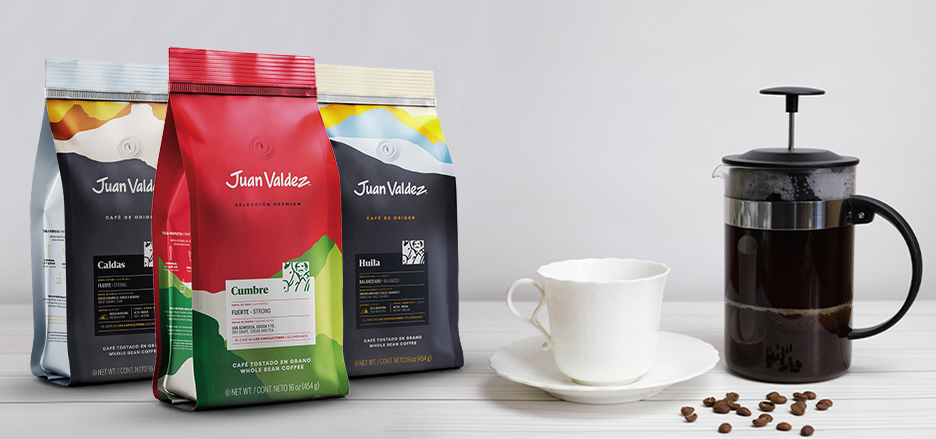
And of course, quality coffee beans. Juan Valdez Huila or Caldas coffees are excellent choices for French press brewing. Huila’s fruity notes shine beautifully in this method, while Caldas’ rich caramel character pairs perfectly with the French press’s full-bodied profile.
What Grind Size Should You Use?
The most common mistake when using a French press is choosing the wrong grind size. Finely ground coffee passes through the metal filter instead of staying behind, resulting in a bitter, overly strong cup filled with sediment.
A coarse grind is essential for French press brewing. Think of particles about the size of coarse sea salt or beach sand. If your grinder has a French press or coarse setting, start there and adjust through experimentation.
Grinding your coffee fresh each time instead of buying pre-ground coffee makes a remarkable difference. The coffee’s oils and aromas begin to dissipate quickly after grinding. Buying whole bean Juan Valdez coffee and grinding it just before brewing will noticeably improve the flavor in your cup.
Step-by-Step French Press Recipe
1. Preheat the French Press
Before brewing, fill the French press with hot water, let it sit for a few seconds, then discard the water. This simple step prevents heat loss during brewing and helps maintain a more consistent extraction.
2. Grind the Coffee
Grind the beans immediately before brewing. Add the freshly ground coffee to the French press.
3. Boil the Water and Let It Cool Slightly
The ideal water temperature is between 90–96°C. Boiling water (100°C) can scorch the coffee and produce a bitter taste. Let freshly boiled water sit for about 30 seconds, or aim for 93–94°C if you have a thermometer.
4. Bloom the Coffee
Pour a small amount of water over the coffee—about twice the weight of the coffee grounds. The coffee will swell, foam, and rise slightly. This stage is called blooming or pre-infusion. During blooming, carbon dioxide is released from the coffee, allowing the aromas to develop more fully. Wait about 30 seconds before continuing.
5. Add the Remaining Water
Slowly pour in the remaining water, ensuring that all the coffee grounds are evenly saturated. Give the coffee a gentle stir.
6. Place the Lid and Wait
Place the lid on the French press without pressing the plunger down. Let the coffee brew for 4 minutes. Neither shorter nor longer—this is the most widely tested and recommended brewing time for a French press.
If you prefer a stronger cup, you can extend the brewing time to about 4½ minutes. However, brewing longer than 5 minutes usually leads to over-extraction and excessive bitterness.
7. Press the Plunger
Slowly press the plunger down using steady, even pressure. If you encounter too much resistance, don’t force it—it may indicate that the coffee was ground too finely or that too much coffee was used. Pressing slowly is important, as rushing will disturb the sediment.
8. Serve Immediately
Pour the coffee into your cup or transfer it to a separate server immediately. Coffee left inside the French press continues to brew, becoming over-extracted and increasingly bitter after just a few minutes.
Which Juan Valdez Coffee Is Best for French Press?
Because French press brewing produces a rich, full-bodied cup with plenty of natural oils, medium to dark roasted coffees tend to perform best with this method.
Caldas – Sweet caramel and ripe fruit notes pair beautifully with the rich body created by the French press. A satisfying and flavorful choice for your morning coffee.
Huila – Medium roast with balanced acidity. In a French press, its chocolate and red fruit notes become more pronounced, making it an excellent choice for both morning and afternoon.
Cumbre – One of Juan Valdez’s darker and bolder coffees. Brewed in a French press, it produces an intense, espresso-like coffee experience—without the paper filter
 Cold Brew Lovers, Raise Your Hands!