Products
No results were found for your search. You can try a different keyword.
How to Make a Latte: Enjoy Café-Quality Coffee at Home
A latte is one of the most popular coffee drinks in the world. The reason is simple—it’s neither as intense as a straight espresso nor as light as an ordinary milk coffee. Instead, it strikes the perfect balance between the two, offering a smooth, satisfying drink topped with velvety milk foam. Enjoying a latte at a café is always a pleasure, but making it part of your daily routine may not be the most practical choice.
The good news is that making a latte at home is surprisingly easy. In fact, it’s one of the most accessible espresso-based drinks you can prepare yourself. With the right coffee beans, perfectly steamed milk, and a little practice, the latte you make at home can be every bit as good as the one from your favorite café—and sometimes even better.
What Is a Latte? How Is It Different from a Cappuccino?
It’s a common question, as the two are often confused. The word latte means “milk” in Italian, and its full name, caffè latte, literally translates to “milk coffee.” It is prepared by adding a generous amount of steamed milk and a thin layer of milk foam to one or two shots of espresso. Because it contains more milk, it has a smooth, creamy texture and a mellow flavor.
A cappuccino, on the other hand, is made with roughly equal parts espresso, steamed milk, and milk foam. The foam is thicker and denser, while the milk content is lower. As a result, cappuccino delivers a stronger, more pronounced coffee flavor, whereas a latte highlights the smooth, creamy character of the milk.
A flat white contains less milk than a latte and almost no foam, allowing the espresso flavor to take center stage. Of the three, the latte is the milkiest and the smoothest.
The Secret to a Great Latte: Choosing the Right Coffee Beans
One of the most overlooked aspects of making a latte is choosing the right coffee beans. Many people assume that milk masks every flavor, but that isn’t the case. On the contrary, when espresso made from low-quality beans is combined with plenty of milk, the result can be a flat, characterless, and unpleasantly bitter drink.
Medium to dark roast coffees produce the best results for lattes. The coffee should be bold enough to stand out through the milk, yet smooth enough that its bitterness doesn’t overpower the other flavors.
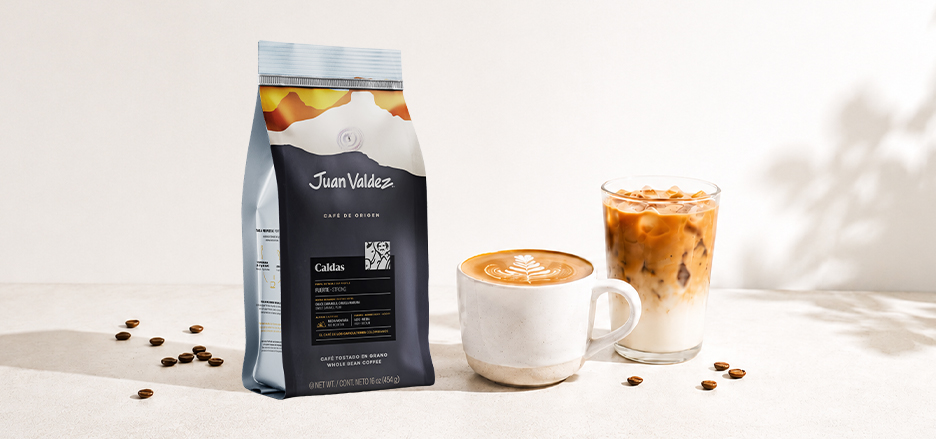
Juan Valdez Caldas is an excellent choice for making lattes. Its sweet caramel and ripe fruit notes blend beautifully with steamed milk, creating a naturally sweet flavor. The result is a balanced, enjoyable latte that often doesn’t require any added sugar. For those who prefer a richer and bolder latte, Juan Valdez Cumbre is another excellent option. Its darker roast profile remains distinctive even when combined with milk.
This is where Colombian Arabica truly shines. Its balanced acidity and caramel-forward flavor profile pair exceptionally well with milk-based coffee drinks.
Can You Make a Latte Without an Espresso Machine?
Many people without an espresso machine ask this question. The short answer is: not exactly—but there are good alternatives.
A traditional latte is an espresso-based drink. An espresso machine uses pressure to produce a highly concentrated coffee, allowing its bold flavor to remain noticeable even after milk is added.
If you don’t have an espresso machine, a Moka pot is an excellent alternative. While it doesn’t produce coffee as concentrated as espresso, it still brews a rich, full-bodied coffee that works well in milk-based drinks. An AeroPress can also be used to achieve a similarly concentrated brew when prepared with the right technique.
Using filter coffee or a French press as the base creates something closer to a café au lait than a true latte. While still enjoyable, it lacks the rich intensity and balanced character that define a classic latte.
The Importance of Milk Selection and Frothing
Milk plays just as important a role as espresso in creating a great latte. The type of milk you choose and how you froth it have a direct impact on the texture and flavor of the final cup.
Whole milk produces the richest foam and the creamiest texture. Its higher fat content creates a more stable, velvety microfoam, making it the preferred choice for latte art and café-style lattes.
Among plant-based alternatives, oat milk has become one of the most popular options for lattes. Barista-style oat milk froths exceptionally well and offers a naturally sweet flavor that pairs beautifully with coffee. The caramel notes of Colombian coffee complement oat milk particularly well.
Almond milk creates a lighter foam while adding a subtle nutty flavor to the drink. Coconut milk is another option, though its distinctive aroma can sometimes overshadow the coffee itself.
To froth your milk, you'll need either a steam wand or an electric milk frother. If your espresso machine includes a steam wand, use it until the milk reaches approximately 60–65°C (140–149°F). Heating the milk beyond this point can scorch it and diminish its natural sweetness. An electric milk frother is also a practical choice for home use. While it may not produce café-quality microfoam, it still delivers excellent results.
As you froth the milk, gently swirl the pitcher in a circular motion. This helps eliminate large bubbles and creates a finer, more even foam. It's a small step, but it makes a significant difference in the final texture.
Step-by-Step Latte Recipe
Start by pulling one or two shots of espresso. The amount of coffee depends on your machine, but 7–9 grams of coffee is generally enough for a single shot. When using Juan Valdez Caldas, aim for a medium grind and an extraction time of 25–30 seconds.
Pour the espresso into a preheated mug or cup. Rinsing the cup with hot water beforehand helps maintain the ideal serving temperature.
Next, froth 150–180 ml of milk. Heat it to 60–65°C (140–149°F), then gently swirl the pitcher to remove any large bubbles and create a smooth, silky texture.
Slowly pour the steamed milk over the espresso. Begin pouring from the center of the cup rather than the edge, keeping the pitcher slightly elevated so the espresso and milk blend evenly. Finish by allowing the foam to settle gently on top. If you prefer, you can hold back the foam with a spoon while pouring the milk, then add the foam at the end.
If you enjoy your coffee without sugar, you can drink it just as it is. The natural sweetness of Juan Valdez Caldas often eliminates the need for additional sweeteners. For an extra touch of flavor, sprinkle a little cinnamon or cocoa powder over the foam.
A Summer Favorite: Iced Latte
Beyond the classic hot latte, the iced latte is one of the most popular coffee drinks during the warmer months. It's also incredibly easy to make. Simply brew a shot of espresso, pour it over a glass filled with ice, and top it with cold milk. No milk frothing is required.
The key is to prevent the espresso from becoming too diluted. As the ice melts, it naturally waters down the drink. For this reason, using a slightly stronger espresso or a double shot produces a more flavorful iced latte. An iced latte made with Juan Valdez Caldas offers a refreshing yet satisfying coffee experience that's perfect for hot summer days.
Starting with Juan Valdez Caldas beans makes the entire process even more enjoyable. When the caramel and ripe fruit notes of Colombian coffee from the Andes meet the smooth, velvety texture of steamed milk, the result is a café-quality latte you can enjoy without leaving home. Prepare your espresso machine, froth your milk, and let Juan Valdez take care of the rest.
 Coffee with a French Press – Step-by-Step Brewing Guide