
Products
No results were found for your search. You can try a different keyword.
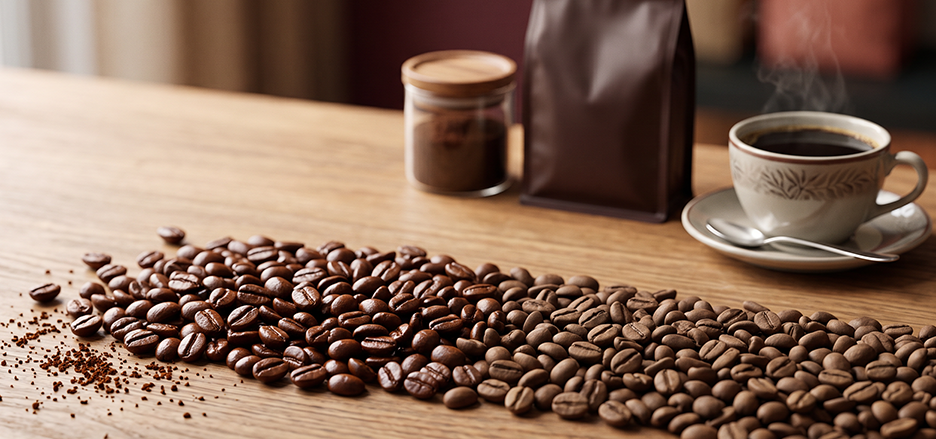
Can you drink coffee that has been forgotten in the back of the fridge, expired but still has a smell and looks normal in color? Harmful? Or is it just unpleasant?
The answer really depends on what you understand the word "disrupt". Coffee does not mold like bread or sour like milk, so in this sense it does not "spoil" But in another sense, perhaps the most important, coffee definitely spoils. It is slowly losing its aroma, vitality and identity. And this loss is felt very clearly in your cup.
For coffee, spoilage occurs in two different ways. First, in terms of safety, that is, can coffee spoil to the point of harming health? Secondly, in terms of quality, that is, when do the taste and aroma of coffee disappear irreversibly?
The answer to the security question is often comforting. Roasted coffee beans or ground coffee stored in dry, sealed packaging can be drunk safely for years as long as they do not come into contact with moisture and foreign substances. Moisture is required for mold formation. This risk is extremely low in coffee stored in a dry environment. An expired coffee usually won't make you sick.
But the answer to the quality question is very different. Once roasted, coffee changes dramatically over the hours, days, and weeks. This change is irreversible, and finally in the cup that familiar, vibrant, aromatic profile gives way to a flat, pale and sometimes bitter taste. It's safe but not drinkable, it's just no longer real coffee.
There are four main factors that reduce the quality of coffee, and they all accelerate each other.
Oxygen is the biggest enemy. Oxidation begins as soon as the coffee bean or ground coffee comes into contact with air. This process breaks down fats, eliminates volatile aroma compounds, and over time leaves the drink with a metallic or cardboard-like taste. The moment you open the packaging, the clock starts ticking.
Humidity is particularly dangerous. Since coffee is a hygroscopic substance, it absorbs moisture from its surroundings very quickly. Steam, wet spoons or air humidity in the kitchen pass into the beans or ground coffee. Moisture both accelerates oxidation and directly spoils the taste. That's exactly why that wet cardboard or mold-like feeling occurs when you drink moist coffee.
Light, especially direct sunlight, breaks down the fats in coffee. Coffee stored in a glass jar can lose most of its aroma under the influence of light within a few days. That's why storage in transparent containers, no matter how aesthetic it may seem in practice, is not correct in terms of quality.
Heat, and especially heat changes, also trigger deterioration. The ever-changing temperature causes the coffee to enter condensation and expansion cycles, which accelerate both the aroma to fly and the moisture to enter the core.
The length of time coffee stays fresh varies dramatically depending on what form it is in.
Coffee in its whole bean state is the longest lasting form after roasting. Unopened,
 What is Misto Coffee and How is it Made?