Products
No results were found for your search. You can try a different keyword.
Everyone who asks this question actually has a different question in mind: Convenience or quality? Is it better to put a capsule into the machine and press a button when you're in a rush in the morning, or spend a few minutes grinding the beans, adjusting the water temperature, and waiting for the coffee to brew?
The answer isn't as clear-cut as you might think. That's because the meaning of "better" varies from person to person. But one thing we can say is that if you choose the right capsule coffee, the gap between these two worlds is much smaller than you might expect. With Juan Valdez's Mujeres Cafeteras capsules, that gap may hardly exist at all.
What Is Capsule Coffee and How Does It Work?
The capsule coffee system emerged in the 1980s and has since become an essential part of many kitchens. The basic concept is simple: a capsule containing pre-ground and packaged coffee is placed into a machine. The machine injects high-pressure water into the capsule, producing a ready-to-drink coffee within seconds.
The biggest advantage of this system is speed. No measuring, no grinding, no brewing time. A consistent cup of coffee even when you're barely awake in the morning... But not all capsules are the same. There are dozens of different brands and varieties on the market. The one you choose will definitely affect the result in your cup. And this is where bean quality, origin, and production philosophy come back into focus.
Is Quality Possible in a Capsule? The Mujeres Cafeteras Difference
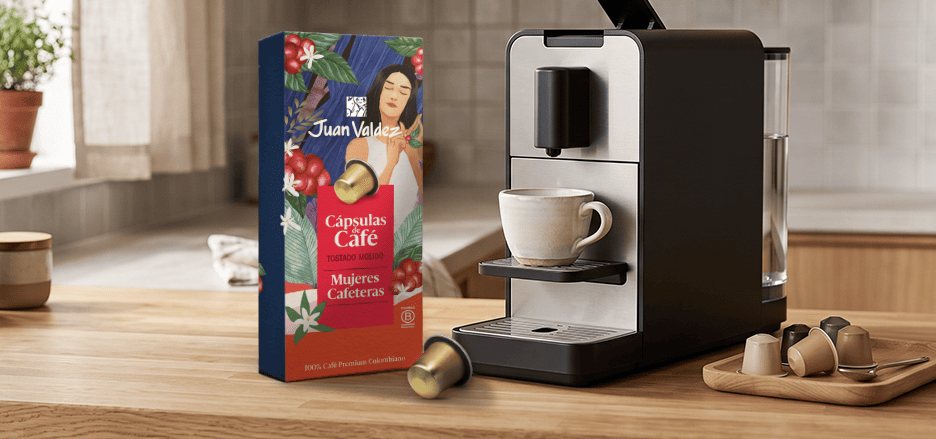
Every capsule contains 100% Colombian Arabica coffee. The Nespresso Original-compatible aluminum capsules contain 5.6 grams of ground coffee, protecting it from oxidation. And behind this coffee is not an ordinary supply chain, but the story of beans grown in the Andes and harvested through the dedicated work of women coffee producers.
Mujeres Cafeteras is Juan Valdez's special collection highlighting women coffee farmers in Colombia. Each box contains eight capsules, and every capsule brings their hard work into your cup. It delivers the balanced, caramel-forward, and smooth profile of high-quality Colombian Arabica with the convenience of a capsule.
So, What Makes Whole Bean Coffee Different?
To make a fair comparison, we also need to consider the advantages of whole bean coffee.
Once coffee beans are roasted, their aromatic compounds begin to change rapidly. When the beans are ground, this process accelerates dramatically. The surface area increases, oxidation intensifies, and aromas begin to dissipate within minutes. In capsule coffee, this process has already begun during production and is slowed down by the aluminum packaging, but it cannot be stopped completely.
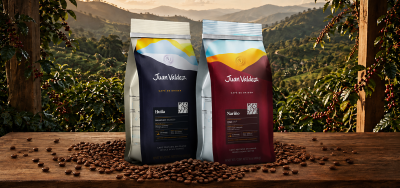
With whole bean coffee, the process is under your control. When you brew freshly ground Huila or Nariño beans using a V60, the red fruit notes, chocolate nuances, and bright acidity in the cup can be more layered and vibrant than the profile a capsule can offer.
But it's also worth noting that poor brewing, stale beans, or an incorrect grind size can make whole bean coffee taste worse than capsule coffee. Whole bean coffee offers potential, not a guarantee. Capsules, on the other hand, offer consistency.
Environmental Impact: The Difference of Aluminum Capsules
One of the most debated aspects of capsule coffee is its environmental impact. Plastic capsules are indeed a serious concern in this regard. But Mujeres Cafeteras aluminum capsules are different.
That's because aluminum is much easier to recycle than plastic. When properly separated, it can be reused many times and does not remain buried in the ground for centuries like plastic. Juan Valdez's broader sustainability commitments, including Rainforest Alliance certification, B Corp certification, and organic production options, form a consistent approach alongside this choice.
Whole bean coffee still has an advantage in this regard. Paper filters can be composted, cloth filters can be reused, and there is significantly less packaging waste. But if you prefer capsules, choosing aluminum and placing used capsules in the appropriate recycling bin can significantly reduce this difference.
When Capsule Coffee Really Wins
Completely dismissing capsule coffee would not be a fair assessment. In some situations, capsules are not only practical but also the most sensible choice.
If you're rushing out of the house in the morning, don't have a coffee grinder, work in an office where employees have many different coffee preferences, or need a convenient way to enjoy quality coffee while traveling, a capsule like Mujeres Cafeteras offers an excellent balance of convenience and quality, making it a great choice. If you have a Nespresso Original machine, integrating it into your routine is incredibly easy. Simply insert the capsule, and within a minute, you have a 100% Colombian Arabica espresso in your hands.
If speed and consistency are your priorities during the day, capsules have the advantage. If you have more time on weekends and enjoy the coffee-making experience itself, you can return to whole beans. These two approaches do not have to be mutually exclusive.
In both cases, the starting point is the same: Great coffee comes with a great story.