Products
No results were found for your search. You can try a different keyword.
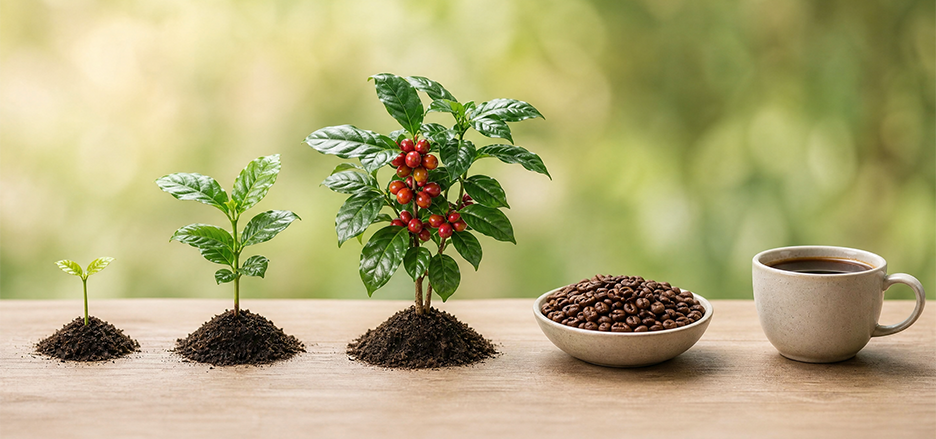
The story of the coffee poured into your cup in the morning begins on a mountainside. A seed that has rested beneath the soil for months, a sapling carefully nurtured for years, and a farming family picking coffee cherries by hand early in the morning are all part of this story.
The journey of coffee from seed to cup is much longer than you might think. Understanding this journey allows you to look at the drink in your cup from a different perspective. When it comes to Juan Valdez, this story becomes a multilayered narrative that begins high in the Andes Mountains and is rooted in decades of family tradition.
First of all, it is important to know that the coffee plant is highly sensitive. It cannot grow in every climate or every type of soil. The regions located between 25 degrees north and 25 degrees south of the Equator, known as the “Coffee Belt” or “Bean Belt,” are the natural home of the coffee plant.
Colombia lies right in the heart of this belt and is one of its most productive regions. The slopes of the Andes, at elevations between 1,200 and 2,000 meters, provide almost everything a coffee plant needs: warm days, cool nights, sufficient rainfall, well-drained volcanic soil, and the slow maturation enabled by high altitude. All of these conditions need to come together; the absence of even one can disrupt the entire balance.
The farmers represented by Juan Valdez have learned these conditions over generations. They know the land, understand the seasons, and recognize the subtle changes in their environment. A farmer in Huila, for example, instinctively knows when to irrigate, when to provide shade, and when to prepare for harvest based on the microclimate of their particular mountain.
The coffee journey begins with a seed. But this seed is not planted directly into the soil. First, it is germinated under controlled conditions in shaded nursery beds. Within a few weeks, a small sapling emerges from the soil.
These saplings grow in nurseries for approximately six months to one year. During this period, regular watering, fertilization, and care are essential. Once the saplings become strong enough, they are transferred to the main fields. In Colombia, this usually means a plot of land on a mountain slope.
It takes an average of three to four years for a newly planted coffee tree to produce its first fruit. This waiting period is one of the best ways to understand why coffee is so valuable. It is not a crop that grows quickly or generates income immediately. Cultivating coffee requires patience. A Juan Valdez farmer planting a sapling today may have to wait years before harvesting its first cherries.
The Ripening of the Coffee Cherry
The coffee plant produces small white flowers that resemble jasmine. Once these flowers fall, coffee fruit begins to develop in their place. Initially green, the fruit gradually turns red, yellow, or orange as it ripens. At this stage, it is known as a “coffee cherry.”
A coffee cherry typically contains two seeds. These seeds eventually become the coffee beans we know after processing. Sometimes only one seed develops, creating a rounded bean known as a peaberry. Juan Valdez’s Colina series is made from these special peaberry beans and is known for its more intense and concentrated flavor profile.
Coffee cherries do not all ripen at the same time. The same branch may simultaneously contain green, ripe, and overripe fruit. This makes the harvesting process extremely important.
Colombia’s mountainous terrain does not allow for large-scale mechanical harvesting. Although this may appear to be a disadvantage, it is actually one of the fundamental reasons behind the quality of Colombian coffee.
During hand harvesting, farmers inspect each fruit individually and pick only those that are fully ripe. This is known as “selective picking,” or “recolección selectiva” in Spanish. Green or overripe cherries are left on the branches. This selectivity directly improves the quality of the final product because unripe beans can produce bitter flavors, while overripe cherries can create fermented and undesirable notes.
A Juan Valdez farmer starts early in the morning and heads up the slopes of the Andes. The amount of coffee cherries a farmer can collect in a single day represents only a few kilograms of coffee beans. When you consider the amount of work involved, the human effort behind a package of Juan Valdez coffee becomes much more tangible.
The harvested coffee cherries are processed without delay. During this process, the outer skin, fruit pulp, and parchment layer are removed to reveal the beans inside. The processing method has a profound effect on the coffee’s flavor profile. There are three main processing methods.
The washed method, or wet process, is the most widely used method in Colombia. The cherries are first de-pulped and then placed in water-filled fermentation tanks for 24 to 48 hours. During this process, the remaining fruit material breaks down. The beans are then washed and dried. The washed process produces a clean, bright profile with pronounced acidity. Much of the familiar balanced and vibrant character of Colombian coffee comes from this method.
In the natural process, the cherries are dried whole in the sun without being de-pulped. As the fruit pulp dries around the bean, it transfers its sugars to the coffee, creating a fruitier, sweeter, and more complex profile. It is less common in Colombia but can be found in specialty and experimental coffees.
The honey process falls somewhere between the two. Part of the skin is removed while some of the fruit pulp remains on the bean. This produces a balanced profile that combines cleanliness with sweetness.
Once processing is complete, the result is the raw bean known as “green coffee.” At this stage, the beans undergo quality grading. They are sorted according to size, density, color, and defect levels. The National Federation of Coffee Growers of Colombia establishes and implements these standards. Juan Valdez beans go through this selection process. Beans that do not meet the required standards are removed, while only high-quality beans proceed to the next stage.
Green coffee is either exported or sent to local roasting facilities. At this point, the producer’s part of the bean’s journey is complete.
Roasting is the magical process that transforms green coffee beans into the coffee we know. At temperatures between 180 and 230°C, the beans are heated inside a rotating drum. Hundreds of chemical reactions take place during this process, transforming the sugars, acids, and amino acids inside the beans into the compounds responsible for coffee’s aroma.
During the early stages of roasting, the beans turn yellow and begin to release a bread-like aroma. As the process continues, the first “crack” occurs. This cracking sound tells roasters that the beans have passed an important stage. Light roasts stop at or shortly after this point. Medium roasts continue further, while dark roasts proceed until the second crack, when oils begin to appear on the surface.
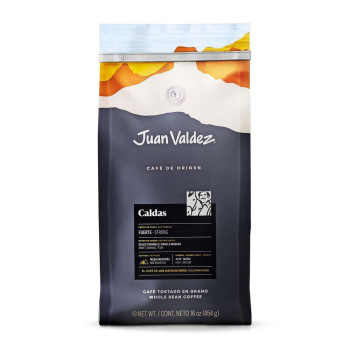
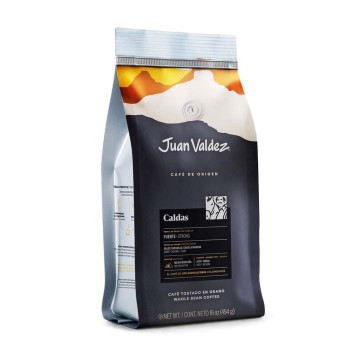
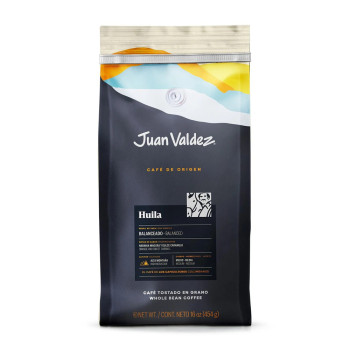
Juan Valdez beans are roasted in Colombia under the supervision of the FNC and according to high quality standards. The roasting profile for each series is designed to bring out the unique characteristics of its region and beans. The fruity notes of Huila reach their fullest expression in a lighter roast, while the caramel depth of Caldas truly develops in a medium-dark roast.
Roasted beans need to rest before they are packaged. After roasting, the beans begin releasing significant amounts of carbon dioxide. Since this gas can cause packaging to swell or even burst, the beans are generally rested for one or two days before being packaged.
That small one-way valve on the package exists for exactly this reason. It allows CO₂ to escape from inside while preventing oxygen from entering. This allows the beans to continue releasing gas while protecting them from oxidation.
It can take three to four years for a seed to become coffee in your cup. The growth of the sapling, ripening of the cherries, harvesting, processing, drying, grading, roasting, packaging, and transportation all require time, effort, and care.
And the final destination of this journey is your cup. When the right brewing method, grind size, water temperature, and other details come together, all the effort invested throughout that long journey finally takes on meaning.
When you hold a package of Juan Valdez coffee in your hands, you can think of the farmer picking cherries early in the morning on the slopes of the Andes, the family that planted that sapling years ago, and the expert carefully controlling the temperature in the roasting room. Coffee carries a story this deep. Your cup deserves to tell it.