Products
No results were found for your search. You can try a different keyword.
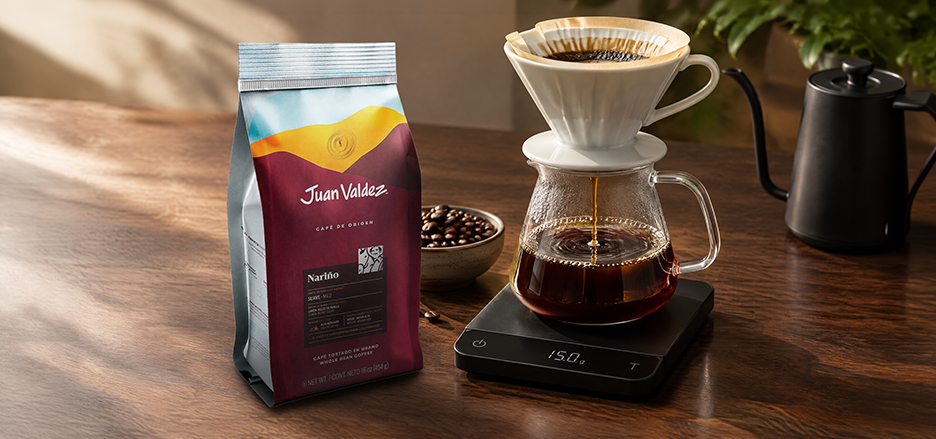
Most people brew coffee by eye. A spoonful here, a glass of water there, and a different result every morning. Sometimes it comes out nice, sometimes it doesn't drink. The reason is difficult to understand because there are many variables and no reference point. This is exactly where the coffee scale comes into play. It's a seemingly small and technical device, but its impact is much greater than you might think. It only measures in grams, but those grams determine everything in the cup.
Coffee, on a scale of kitchen scale designed especially sensitive to brew coffee. A number of several important respects from an ordinary kitchen scale is leaving. First of all, its precision is very high. Standard kitchen scales usually measure with an accuracy of 1 gram. Coffee scales, on the other hand, can achieve a precision of down to 0.1 gram. This makes a critical difference, especially when working with small quantities of coffee. There is also a timer feature. Time is as important as grams in brewing coffee. How many seconds did the espresso take to flow, how long did the V60 take to complete, how long did the blooming process wait—all of these affect extraction quality. A good coffee scale displays both grams and seconds simultaneously and does not require a separate device to keep track of both. The design also makes a difference. Coffee scales are usually made of flat, large-surface and water-resistant material. It can be placed on top of a V60, French press, or espresso cup, and coffee spills or water splashes can be easily wiped off.
Brewing coffee is essentially an extraction process, a filtration practice. The aromatic compounds, sugars, and acids in the coffee bean pass into the water at a certain rate. If this ratio is too high, the result is a bitter, burnt, and intense beverage. If it is too low, the result is a watery, tasteless, and flat beverage. The only way to maintain this balance consistently is to measure. By eye, a spoonful of coffee weighs differently each time. Slightly full, full of erasure, full of cresting, each of them is different from each other. In the same way, a glass of water is not exactly the same amount every time. When these two variables become uncertain at the same time, the outcome is different every morning. Weighing eliminates this uncertainty. 15 grams of coffee, 225 ml of water, the same starting point every morning, a consistent result every morning. When you want to recreate a cup that turned out great one day the next day, you know what to do because you saved that recipe.
The value of the scale is not limited to consistency alone. Each brewing method yields the best results with a different coffee-to-water ratio, and accurately applying these ratios is very difficult without a scale.
Sensitivity is the most critical point for espresso. A shot of espresso usually produces 25 to 35 grams of liquid from 7 to 9 grams of coffee. This ratio is known as the "brew ratio" and every 0.5 gram difference significantly affects the taste. It is almost impossible to achieve this sensitivity without an espresso scale.
For V60 and filter coffee, the standard starting ratio is 1 to 15. That is, 225 ml of water per 15 grams of coffee. But measuring this amount of water by eye using a glass yields different results each time. Tracking the amount of water poured in grams using a scale allows you to monitor both the initial 30 grams filled for blooming and the remaining water. For the French press, coarse grinding and a 1:15 ratio are valid, but the timer during the 4-minute steeping time is also critical. This is where the scale's timer feature comes into play. In methods that work with large quantities, such as cold brew, the scale makes it easier to accommodate both grams and large quantities. It is possible to estimate the ratio of 100 grams of coffee to 800 ml of water and apply it correctly, but doing it with a scale is much faster and more precise.
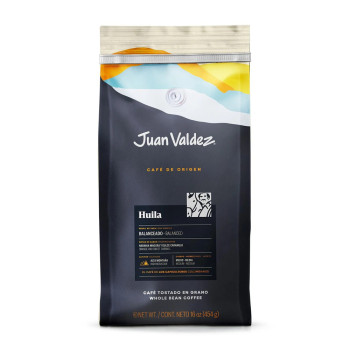
Choosing a quality bean is the first step in brewing. But to fully unleash the potential of that core, the right ratio and the right technique are also essential. In this sense, Juan Valdez beans are both rewarding and demanding. The more accurately you measure and brew, the more meaning they acquire. You brewed Huila beans in the V60 with 15 grams of coffee and 225 ml of water, and the result was fantastic. But in the next attempt, you measured by eye using a spoon and it came out to 12 grams; this time, with the same amount of water, it turned out diluted and flat. Or vice versa, 18 grams came and it was intense and bitter. The core is the same, the method is the same, but the result is very different.
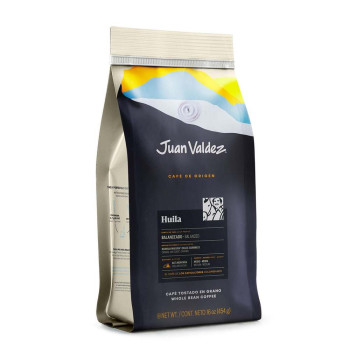
When you measure the full 15 grams each time with the scale, Huila's red fruit and caramel notes, balanced acidity and long finish are consistently reflected in the cup. One day you can enjoy that delicious cup of coffee, and the next day you can enjoy it again. To fully appreciate the complex and layered profiles of Juan Valdez's single-origin beans, weighing is indispensable.
Most people who have experienced this say the same thing: The difference is noticeable from the first week. If you're making coffee for more than one person, you can easily double or triple the serving size. When you try different beans, you can make a fair comparison because you brew both at the same ratio. When a brew turns out great, you know what you did and can replicate it. When it turns out poorly, you can understand what needs to be changed. The coffee scale is essentially a learning tool. When you gain control over the variables, you begin to see what affects what. This approach also develops your brewing intuition over time. The Difference Between a Professional Barista and a Home User
You almost never see baristas working without scales in quality cafes. The input gram and output gram of coffee are measured separately for each espresso shot. The amount of water spilled is monitored for each pour-over. This meticulousness is the reason for the consistency in the cafe. You don't have to maintain the same standard at home. But if you want to approach that standard, the path lies through testing. Brewing a quality bean like Juan Valdez with professional care means having the coffee you drink at the cafe at home.
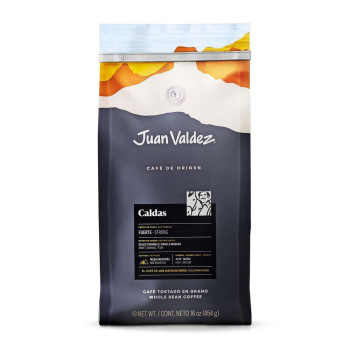
If you want to enjoy Juan Valdez's Huila, Nariño, or Caldas to their full potential, the scale is the key that unlocks that potential. To brew that meticulously sourced bean from the Andes with the same care and complete this cycle, all that's needed is a little something. Just a few grams of precision. Place the scale on the table, let Juan Valdez handle the rest.
 What Is Acidity in Coffee, and Why Is It Important?